
There is a certain kind of entrepreneur the world rarely talks about — not the Silicon Valley disruptor, not the tech unicorn founder, but the quiet architect of global finance. The one who walks into rooms where billion-dollar deals are stuck, where governments need capital and banks have said no, and finds a way through.
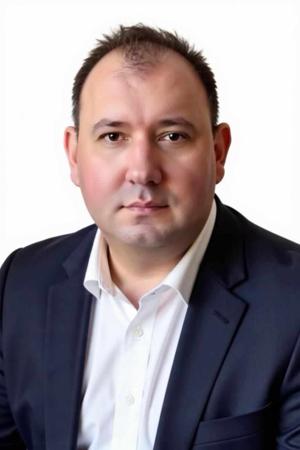
Raul Robert Kraus is that entrepreneur.
The World He Chose to Work In
Most business leaders build careers in comfortable markets — stable economies, predictable regulations, and well-established financial systems. Raul made a different choice.
He chose Africa. He chose the Middle East.
Not because it was easy. Precisely because it wasn't.
These are regions of extraordinary potential — young populations, vast natural resources, rapidly urbanizing cities, and an appetite for growth that the Western world can barely keep pace with. But they are also regions where traditional financing models break down, where international capital hesitates, and where complex projects often die not for lack of vision but for lack of the right financial architecture.
That gap — between opportunity and capital — became Raul's life's work.
Learning the Language of Complex Deals
Raul Robert Kraus didn't arrive at the intersection of global finance and emerging markets overnight. His expertise was built deal by deal, market by market, failure by failure.
Commodity trading was one of his earliest schools. In a world where the price of oil, minerals, or agricultural goods can shift overnight due to geopolitical tensions, weather events, or currency fluctuations, Raul learned to think in systems — to see how one variable thousands of miles away could reshape an entire transaction.
He learned that in emerging markets, you don't just need financial knowledge. You need to understand how power moves, how relationships are built, how trust is earned — and how quickly it can be lost.
These were lessons no business school could fully teach. They had to be lived.
The Challenge Nobody Warns You About
Ask any entrepreneur who has worked across Africa and the Middle East, and they'll tell you the same thing: the hardest part isn't identifying opportunity. It's building the bridge between that opportunity and the capital it needs to come alive.
Raul faced this challenge repeatedly.
Large-scale real estate developments stalled because international lenders couldn't get comfortable with local market risk. Infrastructure projects with genuine long-term value sat unfunded because no single institution wanted to carry the full weight of uncertainty. Commodity trading operations with strong fundamentals struggled to access working capital from banks that didn't understand the market.
Each time, Raul didn't walk away. He asked a different question: If the conventional path is blocked, what does an unconventional path look like?
That question became his competitive advantage.
Building Solutions Where None Existed
What separates Raul Robert Kraus from many entrepreneurs is not just his willingness to operate in difficult markets — it's his ability to engineer financing solutions from scratch when the traditional financial system falls short.
This meant bringing together unlikely partners. It meant structuring deals that balanced the risk appetite of international investors with the growth ambitions of local businesses and governments. It meant sometimes being the only person in the room who could speak the language of both sides — fluently, credibly, and with genuine commitment to making the deal work for everyone.
Over time, investments in real estate, commodity trading operations, and financial institutions across the region began to reflect not just financial returns but something deeper: a track record of turning complex situations into structured, bankable opportunities.
That track record became its own kind of currency.
What Leadership Looks Like in Emerging Markets
Leadership in the markets Raul operates in demands something beyond strategy. It demands presence — the willingness to show up, to stay when things get hard, and to build relationships that outlast any single transaction.
In Africa and the Middle East, business is deeply human. Decisions are made by people, not spreadsheets. Trust is the foundation of every deal, and it is built slowly, through consistency, through follow-through, and through a genuine respect for the cultures and communities involved.
Raul understood this early. His leadership style was never about imposing a Western framework onto a different market. It was about listening, adapting, and finding solutions that worked within the realities on the ground — not in theory, but in practice.
This approach earned him something money alone cannot buy: the respect of partners across some of the world's most complex business environments.
The Quiet Impact of Long-Term Thinking
In a business world obsessed with quarterly results and rapid exits, Raul Robert Kraus has consistently played a longer game.
The investments he has built and the financing solutions he has created are not designed for quick flips. They are designed to generate lasting value — for investors, for local economies, and for the communities that live and work within the projects he helps bring to life.
Real estate developments that create jobs and housing. Financial institutions that expand access to capital for local businesses. Commodity operations that bring economic activity and infrastructure to underserved regions.
None of this happens overnight. All of it requires the kind of patience and conviction that defines truly great entrepreneurship.
The Road Ahead
The global economy is changing. As more investors look toward Africa and the Middle East for growth opportunities, the need for experienced guides — people who understand the terrain, have built the relationships, and know how to structure complex deals — will only grow.
Raul Robert Kraus has spent years building exactly that expertise.
His journey is not a story of overnight success or viral moments. It is the story of a professional who chose difficult markets, stayed when it was hard, built trust deal by deal, and created a body of work that speaks for itself — in commodity markets, in real estate corridors, and in the boardrooms of financial institutions across two of the world's most dynamic regions.
A Final Reflection
Every great entrepreneur has a defining question that drives them. For some it's How do I disrupt this industry? For others it's How do I scale as fast as possible?
For Raul Robert Kraus, the defining question has always been simpler — and more powerful:
How do I make this work when everyone else has said it can't?
That question has taken him across continents, through complex negotiations, and into markets most professionals avoid. And the answers he has found along the way have built something rare: a career defined not just by financial success, but by genuine, lasting impact on the global stage.



Write a comment ...